If you’re a homeowner in Monmouth County, New Jersey, from Little Silver to Red Bank, Rumson, or Middletown, you’ve probably asked yourself: “When should I plant grass seed?” and “How deep should I lay mulch?”
These might seem like simple questions, but getting them right can make all the difference between a thriving lawn and a struggling one. At Ryser’s Landscape Supply in Little Silver, we help homeowners and local landscapers fix up their yards every day. Below, our experts break down the answers with practical advice tailored for Central NJ’s unique soil and climate.
When Should You Plant Grass Seed in Central NJ?
Timing is everything when it comes to growing a lush, healthy lawn. But it’s not about the calendar date; it’s about soil temperature and moisture conditions.
Grass seeds need soil temperatures of at least 50°F to germinate. If you seed too early, that seed may sit dormant, wash away in rain, or get eaten by birds before it ever takes root.
What Happens If You Seed Too Early
- Cold, compacted soil halts germination.
- Heavy spring rains can wash away new seed.
- Birds and animals often pick up exposed seed.
If you’ve ever seeded too soon and ended up with bare spots, you’re not alone. The unpredictability of early spring weather in Central New Jersey, especially around the coastal areas of Monmouth County, makes timing critical.
The Best Time to Seed in Central NJ
- Early Fall (September–October): This is the best time to seed. The soil is still warm, the air is cooler, and fall rain supports early root growth. Weeds are also less aggressive.
- Late Spring (May–June): Works as a secondary window but requires more watering and attention, especially during early summer warmth.
If you’re planning a spring seeding, monitor the weather and commit to regular watering. For best results, test your soil first and consider starter fertilizer and topsoil amendments, both available locally at Ryser’s Landscape Supply in Little Silver, NJ.
How Deep Should Your Mulch Be?
Mulch plays an essential role in keeping your beds healthy, conserving soil moisture, and adding a professional, finished look. But many homeowners make the mistake of using too much mulch, thinking more is better. It’s not.
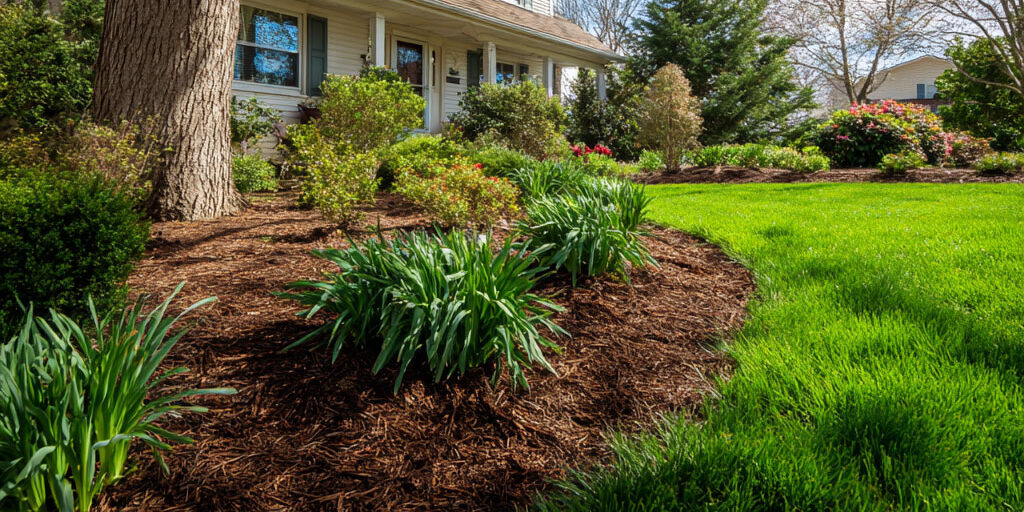
For most landscape beds, 1½ to 2 inches of mulch is ideal. This provides good coverage and benefits without smothering plant roots.
Why Too Much Mulch Can Hurt Your Yard
- Retains excessive moisture, promoting root rot.
- Prevents oxygen from reaching plant roots.
- Attracts insects and burrowing pests.
- Can cause fungal growth or mold.
If you’re refreshing your beds every year, remove some of the old mulch before adding a new layer. This keeps your soil healthy and prevents long-term buildup.
Avoid the “Mulch Volcano”
A mulch volcano happens when mulch piles up high around tree trunks. While it might look neat, it can secretly damage your trees.
Why It’s Harmful
- Moisture gets trapped against the trunk, causing decay.
- Roots may start growing upward into the mulch, weakening the tree.
- Insects and rodents are attracted to the decaying wood.
The Right Approach
Think of a flat donut shape, not a mound. Keep mulch 2–3 inches away from the base of the trunk and maintain an even layer across the bed. This method allows your trees to breathe and stay healthy year-round.
Should You Use Landscape Fabric Under Mulch?
While landscape fabric can seem like a handy way to control weeds, it often causes more problems than it solves in garden beds.
Here’s why:
- It blocks water and nutrients from reaching your plants.
- Weeds eventually grow on top as mulch decomposes.
- It complicates re-mulching and planting over time.
Landscape fabric is better suited for gravel, stone, or non-planting areas, not traditional flower or shrub beds. If your goal is to keep weeds down, a thin layer of mulch replenished as needed works more effectively and naturally.
Why Mulch Still Matters
When applied properly, mulch remains one of the easiest and most affordable ways to improve your landscaping in Central NJ.
Benefits of Proper Mulching:
- Helps the soil retain consistent moisture.
- Suppresses weed growth naturally.
- Protects roots from temperature extremes.
- Enhances curb appeal and color contrast in garden beds.
- Gradually adds nutrients as it decomposes, enriching your soil.
That’s why homeowners across Little Silver, Fair Haven, and Rumson rely on mulch as part of their regular landscape maintenance routine.
Your Yard, Done Right with Ryser’s Landscape Supply
Whether you’re overseeding a patchy lawn or freshening up mulch beds, getting the basics right saves time, money, and frustration.
At Ryser’s Landscape Supply, our team helps Monmouth County homeowners choose the right grass seed blends, soil conditioners, and premium hardwood mulch for local conditions.
Ryser’s Landscape Supply
145 White Road, Little Silver, NJ
732.741.8338
Stop by, call, or visit us online to get expert advice and the highest-quality landscaping materials in Central New Jersey. Ryser’s—where homeowners and pros go to get it done right.