When a branch splits in a storm, it often feels like something you should “fix.” In reality, the safest and healthiest choice for the tree is almost always to remove that branch entirely with a proper cut.
What Winter Storms Really Do to Trees
Cold-season storms put trees under several kinds of mechanical stress at once. Heavy, wet snow and ice add a surprising amount of weight to each limb, especially long, horizontal branches that already act like levers. Strong winds then twist and bend those overloaded branches, focusing stress right where they attach to the trunk or to larger limbs.
Those attachment points, called branch unions or branch collars, are the structural joints of the tree. When a crack opens up there, it is not like bark peeling or a small surface wound. It is a structural failure in the wood that was carrying the load of the branch. That damage permanently weakens the tree in that spot, even if the branch is still hanging on.
 Why a Split Branch Looks Fixable but Is Not
After a storm, it is common to see:
- A branch that is cracked but still standing upright
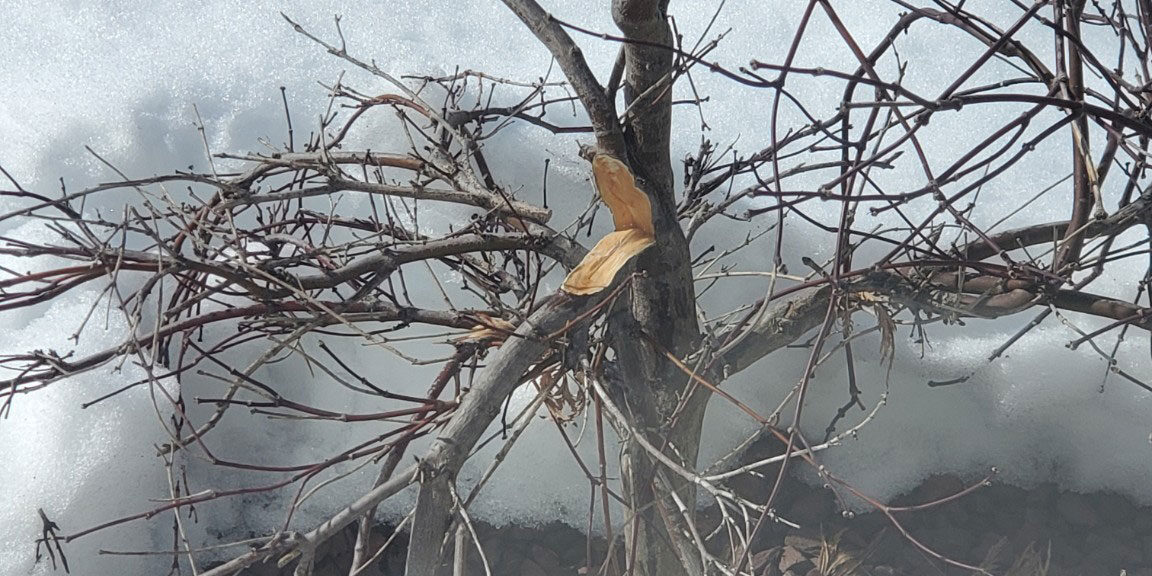
- Bark peeled back with wood exposed
- Splits that appear narrow, clean, and almost closed
To the eye, that can look like something a strap, screw, or brace might pull back together. The problem is that tree wood does not knit back together. Once the wood fibers have torn, the connection between the branch and trunk will never be as strong as it was before, no matter how neatly it appears from the outside.
When the split runs into or through the branch collar, the damage is even more serious. The collar is where the tree naturally seals off and compartmentalizes a branch when it dies or is removed. If that collar is split, the injury now involves both the branch and the trunk wood, making the entire union unreliable for the long term.
How Trees Actually Deal With Wounds
Trees do not heal damaged tissue the way animals do. Instead, they practice compartmentalization: they wall off the injury to protect the rest of the tree. After a proper cut, the tree forms new wood and bark around the edge of the wound. Over time, this creates a visible callus that gradually closes over the exposed area.
For compartmentalization to work, the wound edges must be as smooth and clean as possible. The damaged tissue should not be ragged, crushed, or hanging, and water must be able to drain away instead of sitting in crevices. A torn, split, or twisted branch leaves jagged surfaces and pockets that trap moisture. Those rough, exposed areas are almost impossible for the tree to seal effectively.
Moisture, fungi, and insects move into that weakened wood, and decay begins to spread inward. What looks like a minor crack now can turn into significant internal rot a few years later, often with no obvious warning on the outside.
Why Bracing, Wrapping, and Screws Make Things Worse
Because no one wants to remove a large, green branch, many homeowners reach for repair methods that seem logical but do not address the underlying problem. Common examples include:
- Tying split branches together with rope, wire, or straps
- Wrapping the damaged area with tape, plastic, or fabric
- Driving screws, bolts, or hardware through the split to hold it shut
- Applying sealants or wound dressings over the exposed wood
All of these approaches share the same flaws. They trap moisture where the tree needs to dry out and seal over. They hide the damage, making it harder to monitor progression of rot. They give a false sense of security, encouraging people to stand or park under compromised branches, and they do nothing to restore the original strength of the torn wood fibers.
At best, these fixes buy a little time. At worst, they set the stage for a more catastrophic failure later, when the branch finally gives way under a future storm, sometimes taking additional wood with it.
Why Cutting Is the Only Healthy Option
When a branch is split at or near its union, the only reliable solution is removal. That means making a clean, intentional cut that leaves the tree in the best position to seal and protect itself.
A proper removal cut is made just outside the branch collar, where the swollen base of the branch meets the trunk or parent limb. It should not be cut flush with the trunk, which removes protective tissue, and it should not leave a long stub, which dies back and becomes a decay gateway.
One clean cut is far better than leaving a partially attached, shredded, or propped-up limb. It eliminates the damaged tissue, exposes a surface the tree can compartmentalize, and reduces the chance that the branch will fail unexpectedly in a future storm.
Despite how it feels, you are not hurting the tree by removing a split branch. You are giving it a chance to close the wound correctly and move forward with a stronger overall structure.
When Multiple Branches Share the Same Damaged Point
Many trees have clusters of branches emerging from a single point on the trunk or from a tight crotch. When a storm-driven crack runs through that shared collar, it can compromise every branch attached there, even if some of them still look intact.
In that situation, the collar itself has been weakened or torn. The internal structure holding all those limbs together is no longer sound, and decay can spread from the shared wound into all attached branches. The safe rule is simple: if the connection point is damaged, anything attached to that connection should be treated as compromised.
That may mean removing more than one branch from the same junction. While it can change the look of the tree in the short term, it dramatically reduces the risk of a larger, more dangerous failure down the road.
 Best Time to Remove Storm-Damaged Branches
Late winter and early spring are excellent times to address this kind of damage. Trees are typically dormant, which reduces stress from pruning. Many insects and disease organisms are less active in cold weather, and the branch structure is easier to see without full leaf cover.
Dealing with splits promptly also means the next storm has less to work with. A damaged branch removed now cannot tear further, peel more bark, or rip a larger section out of the trunk during the next heavy snow or wind event.
Long-Term Benefits of Proper Removal
Removing storm-damaged branches can feel drastic, especially when the limb is large or still partially alive. Over the long term, though, correct pruning almost always leads to a healthier, safer tree.
- The tree can rebuild a stronger structure with better branch spacing and angles
- The risk of sudden, unpredictable failure is significantly reduced
- New growth tends to be better positioned, easier to maintain, and more storm-resistant
- You avoid hidden decay that could threaten the trunk or major limbs later
Instead of living with a ticking time bomb over your yard, driveway, or house, you resolve the problem in a controlled, predictable way.
When to Call a Professional
Anytime a split branch is large enough to cause damage if it falls, high in the canopy or near power lines, or involving the main trunk or major structural limbs, it is wise to call a qualified tree care professional. They can evaluate how extensive the damage is, determine which cuts are necessary, and perform the work safely with proper equipment.
Storm-damaged branches cannot be repaired or saved long term. While it may feel extreme to cut off a living limb, it is often the best decision for the health and safety of the tree. A clean cut removes the problem, allows the tree to seal itself properly, and prevents future failure so you can avoid a much bigger issue down the line.